
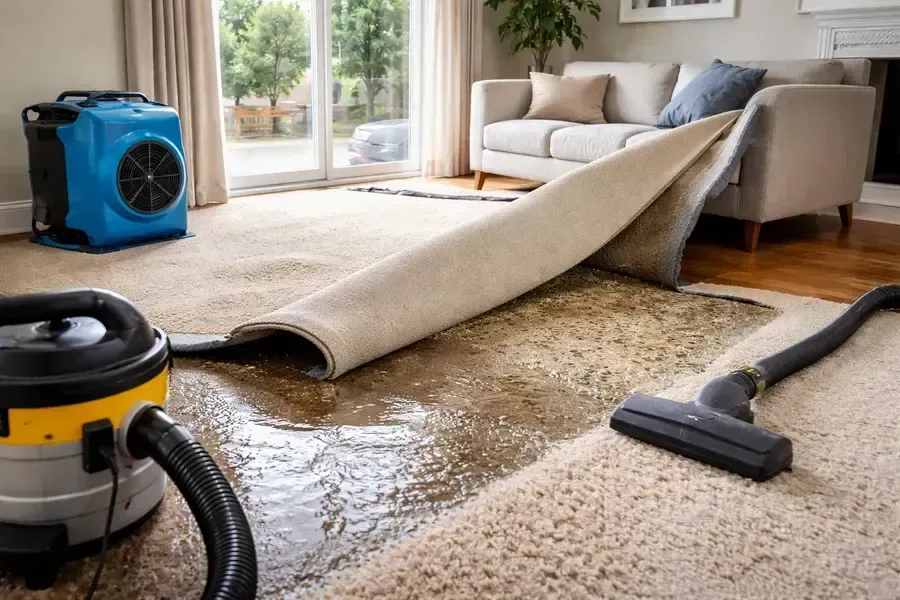
Spaces Recovered After Water Intrusion
Flood Damage Restoration in Pueblo for unwanted water affecting carpeted and furnished areas
Water from flooding, burst pipes, appliance leaks, or storm intrusion spreads quickly across carpet, padding, and subflooring, creating conditions for mold growth and structural damage within hours. Nazareth Enterprises responds to water events in Pueblo, Colorado Springs, and surrounding areas by first assessing the extent of saturation and contamination, then removing standing water and extracting moisture from salvageable materials. Speed matters—carpet and padding that remain wet for more than 24 hours typically require removal rather than drying, and wood subflooring can warp or rot if moisture is not extracted promptly.
The restoration process begins with water extraction using high-capacity vacuums, followed by removal of unsalvageable padding and debris. Technicians inspect carpet backing for delamination and test moisture levels in subflooring to determine whether drying equipment alone is sufficient or whether materials must be removed. Air movers and dehumidifiers run continuously to reduce humidity and accelerate evaporation, while antimicrobial treatments address contamination from outdoor flooding or sewer backups.
Call (719) 542-8179 immediately when water damage occurs so technicians can evaluate conditions and begin moisture removal before deterioration progresses.
What the Service Actually Accomplishes
Flood damage restoration prioritizes moisture removal and contamination control to limit secondary damage such as mold growth, odor development, and structural compromise. Technicians document affected areas, measure moisture content in multiple materials, and establish drying goals based on the type of water involved—clean supply line water requires less aggressive treatment than storm runoff or sewer backups.
After restoration, floors are dry to the touch, and moisture readings in subflooring return to normal ranges, preventing warping or mold development beneath finished surfaces. Carpet that was salvageable is cleaned, sanitized, and reinstalled over new padding, while sections damaged beyond recovery are removed and prepared for replacement. Rooms no longer smell damp or musty, and walls and baseboards show no signs of wicking or water staining.
Not all water-damaged materials can be saved—porous items like padding, drywall, and insulation often require disposal even when surface materials appear intact. The extent of restoration depends on how quickly water is removed, the source and cleanliness of the water, and whether affected materials were dried properly before mold began growing.
Common Questions About This Service
Prompt response to water intrusion limits damage and reduces the scope of materials that must be removed and replaced rather than dried and cleaned.
How quickly must restoration begin after water enters a carpeted space?
Moisture removal should start within 24 hours to prevent mold growth and minimize damage to padding and subflooring. Carpet that remains wet longer than 48 hours typically requires replacement because backing adhesives break down and microbial growth becomes difficult to reverse.
What happens to carpet padding after flood damage?
Padding almost always requires removal and replacement because it absorbs and holds water, creating a reservoir of moisture that prevents carpet and subflooring from drying. Even if padding appears dry on the surface, retained moisture deep within the material supports mold growth and odor development.
Why does restoration involve air movers and dehumidifiers rather than just extracting water?
Extraction removes standing and surface water, but moisture remains in subflooring, baseboards, and lower wall sections. Air movers increase evaporation rates by circulating dry air across wet surfaces, while dehumidifiers remove moisture from the air to prevent it from condensing back onto materials.
What types of water events require antimicrobial treatment during restoration?
Storm flooding, sewer backups, and any water that contacted soil or outdoor contaminants carries bacteria and pathogens that require disinfection. Clean water from supply lines or appliance leaks usually does not need antimicrobial treatment unless materials remained wet long enough for mold to begin growing.
How does Colorado's dry climate affect flood damage restoration timelines in Pueblo?
Low humidity accelerates evaporation, allowing materials to dry faster than in humid climates. However, rapid drying can cause wood subflooring to shrink unevenly, creating gaps or warping, so controlled drying with dehumidifiers produces better outcomes than relying on ambient air alone.
Nazareth Enterprises provides rapid response to water damage in homes, rental properties, and commercial buildings throughout Pueblo, Colorado Springs, and nearby areas where storm events and plumbing failures create restoration needs. Contact us immediately after water intrusion to begin assessment and moisture removal.